

Grease Trap Maintenance
Grease trap maintenance is essential for keeping commercial kitchens compliant, operational, and free from costly plumbing issues. Regular cleaning removes built-up fats, oils, and grease before they cause blockages, odors, or overflows that can disrupt business and lead to violations. RivaClear Environmental provides professional grease trap pumping, cleaning, and documentation throughout Western North Carolina to help businesses stay compliant, protect their plumbing systems, and operate with confidence.
What is Grease Trap Cleaning?
Grease trap cleaning is the process of removing fats, oils, and grease—commonly referred to as FOG—that accumulate inside a commercial kitchen’s grease trap or interceptor. Every time food is cooked, dishes are washed, or equipment is cleaned, grease and oil enter the drainage system. Grease traps are designed to capture these materials before they reach the sewer system, protecting plumbing infrastructure and the environment.
Over time, grease traps fill with waste and lose their ability to properly separate grease from wastewater. When this happens, businesses often experience slow drains, foul odors, grease overflows, or unexpected backups that can disrupt operations and lead to compliance issues.
At RivaClear Environmental, we provide professional grease trap pumping, cleaning, and inspection services throughout Western North Carolina. Our team removes all accumulated grease and solids, thoroughly cleans interior surfaces, and ensures your system is functioning properly. Every service includes detailed documentation to support health department and environmental compliance.
Routine grease trap maintenance helps protect your plumbing, reduce emergency service calls, and keep your business operating smoothly and responsibly.
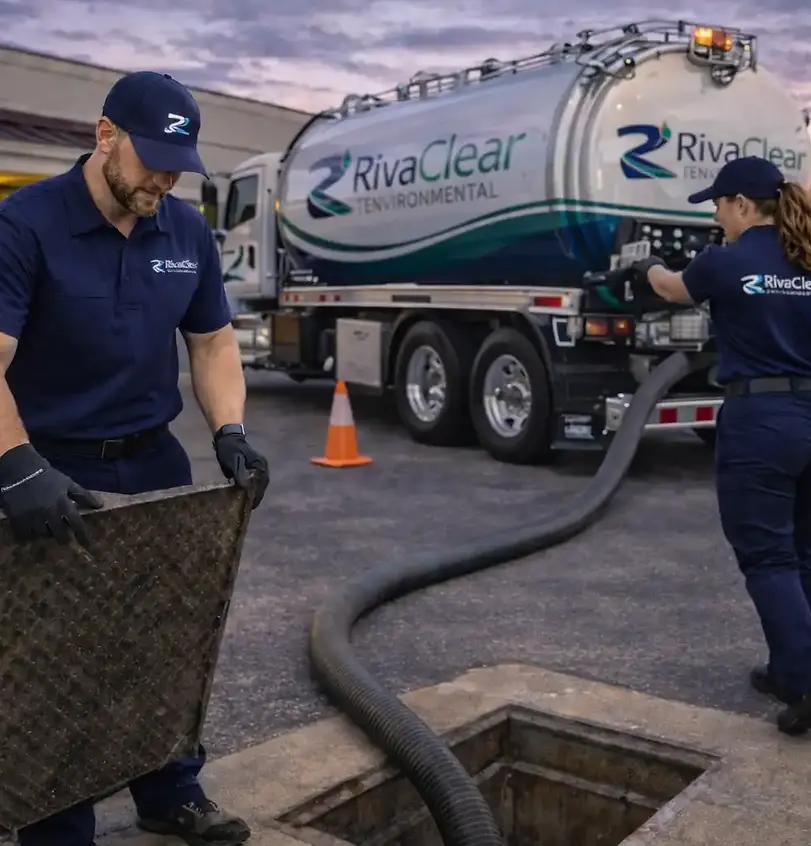
The RivaClear Environmental Grease Trap Cleaning Process
Every grease trap system is different, which is why our process is designed to deliver consistent, thorough results for kitchens of all sizes. Here’s how we handle grease trap cleaning from start to finish:
1. System Review During Service
As part of the pumping process, we review the condition of your grease trap or interceptor, including grease buildup and flow performance that become visible during service. This allows us to service the system correctly and identify conditions that could lead to clogs or overflows.
2. Pumping and Waste Removal
Using specialized vacuum equipment, we remove all grease, solids, and wastewater from the trap. Our trucks are equipped to handle everything from small indoor traps to large exterior interceptors safely and efficiently.
3. Deep Cleaning and Scraping
Once the waste is removed, we scrape and rinse the interior walls, baffles, and components of the system. This step eliminates residual grease buildup and restores the trap’s full operating capacity.
4. System Flush and Flow Check
5. Proper Waste Transport and Disposal
All collected grease and waste is transported to licensed facilities for environmentally responsible disposal or recycling. RivaClear Environmental follows all applicable regulations—no shortcuts, no improper dumping.
6. Compliance Documentation
You’ll receive detailed service records and manifests after every visit. These documents are essential for health department inspections and environmental audits, giving you peace of mind.
7. Ongoing Maintenance Scheduling
We help you establish a service schedule based on kitchen volume, trap size, and local requirements. Whether monthly, bi-monthly, or quarterly, we make grease trap maintenance easy and predictable.
After cleaning, we flush the system to confirm proper flow. If we identify potential concerns or developing issues, we document them and provide recommendations to help prevent future problems.
Grease Trap Cleaning for Restaurants and Commercial Kitchens in Western North Carolina
Restaurants and food service facilities generate large volumes of grease every day, making grease trap maintenance a critical part of daily operations. Local health departments and wastewater authorities across Western North Carolina require grease traps to be properly serviced to prevent sewer damage, environmental harm, and costly violations.
RivaClear Environmental specializes in grease trap cleaning for restaurants, commercial kitchens, and food service facilities throughout the region. We work with a wide range of businesses—from small cafés to high-volume kitchens—to create service plans that match operational needs and inspection requirements.
Our team arrives on time, performs thorough cleaning, handles all waste responsibly, and provides clear documentation after every visit. We handle the dirty work so your staff can stay focused on running your business.

Frequently asked questions

Proudly Serving Western North Carolina
Maggie Valley
Grease Trap Maintenance
Grease traps are often out of sight—and out of mind—until something goes wrong. Regular maintenance from RivaClear Environmental helps prevent issues before they disrupt your operation.

Avoid Costly Repairs
Neglected grease traps can cause clogs, backups, and damage to plumbing systems. Routine cleaning reduces the risk of expensive emergency situations.
Stay Compliant
Local regulations require proper grease management. Scheduled service helps ensure your business remains compliant and inspection-ready.
Prevent Odors and Blockages
Built-up grease creates strong odors and attracts pests. Regular cleaning keeps kitchens cleaner and more pleasant for staff and customers.
Protect the Environment
Responsible grease removal helps prevent sewer overflows and protects local waterways. We ensure all waste is handled and disposed of properly.
Keep Your Operation Running
Unexpected grease trap failures can shut down a kitchen. Preventive maintenance means fewer interruptions and more consistency.

Signs It’s Time to Schedule a Grease Trap Cleaning
Not sure if your grease trap needs service? Common signs include:
-
Slow or backed-up drains in sinks or floor drains
-
Persistent odors near drains or grease trap areas
-
Grease leaking or overflowing from the trap
-
Frequent drain clogs or recurring drainage issues
-
Extended time since last service (most systems require cleaning every 1–3 months)
If you notice any of these issues, it’s time to schedule service before they escalate.

Complete Grease Management Services in Western North Carolina
While grease trap cleaning is a core service, RivaClear Environmental offers a full range of grease and wastewater solutions to support commercial kitchens and facilities across Western North Carolina:
